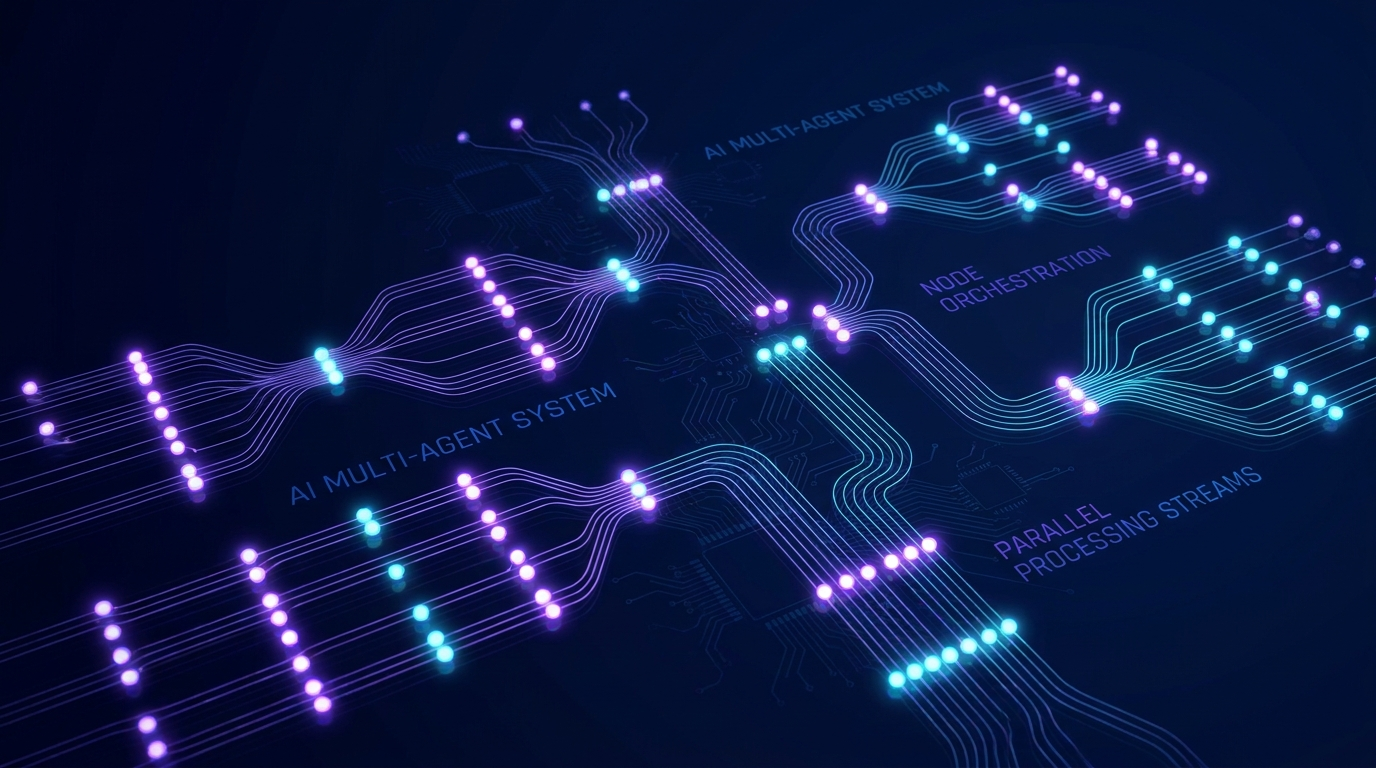
The short version: Anthropic's latest model does not just complete tasks — it plans them, then runs hundreds of parallel AI workers to execute each part simultaneously. For businesses, this means the same AI tool that once drafted an email can now coordinate an entire research and drafting process without being prompted at each step.
What Anthropic announced
Claude Opus 4.8 launched on 28 May 2026, just 41 days after Opus 4.7. Alongside benchmark improvements across coding, reasoning, and office tasks, the headline feature is dynamic workflows — currently in research preview for Enterprise, Team, and Max plan users of Claude Code.
Dynamic workflows work like this: you describe a goal to Claude rather than a task. Claude writes its own plan, then spawns and coordinates dozens or hundreds of sub-agents to carry out each step in parallel. The sub-agents can run for extended periods, work across large codebases or document sets, and return a single consolidated result. You monitor; you do not micromanage.
Anthropic also introduced effort control on claude.ai — letting users dial down the model's token usage for simpler tasks — and a faster, more affordable mode that makes the model cheaper to run for high-volume workflows.
What changed, and why it matters
Until now, using AI well required knowing how to break a problem into steps and prompt each one. That skill — prompt engineering — produced better results than casual use, but it was still you doing the coordination. Dynamic workflows shift that coordination onto Claude.
For legal, compliance, and research workflows, this is already in deployment. Clio, CoCounsel's legal AI platform, reported measurable improvements in consistency and reasoning quality from Opus 4.8 in the first week of access — for workflows where reliability is a professional requirement, not just a preference.
For smaller businesses, the implications are less dramatic today but directionally important. The tools that allow AI to coordinate work across a whole workflow — not just respond to one prompt — are being built and tested in large enterprises right now. The same capability will reach SMB-tier tools within a year.
What a UK small business operator should take from this
You do not need Opus 4.8 or dynamic workflows to act on this signal. But the signal itself is worth understanding: AI is no longer limited to completing a single task when prompted. It can manage a sequence of tasks, coordinate parallel workstreams, and return a finished result.
- If you are managing a process that requires several steps — quoting, scheduling, reporting, follow-up — the tools to automate the whole process, not just individual steps, are mature enough to evaluate now.
- If you are using AI as a single-step tool (write this email, summarise this document) and wondering why the return feels limited — this is why. The leverage is in the workflow, not the single task.
- If you are considering hiring to cover admin capacity — evaluate what a structured AI workflow could replace first. The economics are changing faster than most hiring timelines account for.
Operator move for this week
Write down the last three things you delegated to a human because you did not trust AI to handle them. For each, ask: "What would a well-specified, multi-step AI workflow for this look like?" That exercise will show you where to invest your implementation attention next.